
 Cost & planning, 3 min read
What Affects the Cost of Interior Painting in Toronto
Room size is only the start. Here is what really moves an interior painting quote, and how to compare quotes from different painters fairly.
Free on-site estimatesFree estimates
WSIB registered
Fully insured
Written workmanship warrantyWritten warranty
Basements are some of the most useful rooms in a Toronto house: rec rooms, home gyms, guest rooms and rental suites. They are also the hardest rooms to paint well, because concrete holds moisture and open ceilings are full of joists, ducts and pipes. Here is how to approach basement painting so the finish lasts.
Paint does not stop water. Before painting concrete or block walls, find out whether moisture is coming through them. A simple check:
Active leaks, damp patches after rain or standing water need to be fixed before painting, usually from the outside or with drainage work. Humidity can often be managed with a dehumidifier and better ventilation.
White, chalky deposits on concrete or brick are called efflorescence. They are mineral salts left behind as water moves through the masonry and evaporates. Efflorescence has to be removed before painting, and it is a sign that the wall gets wet, so check the moisture before covering it.
Ordinary wall paint applied straight onto damp, dusty concrete is the most common reason basement paint peels.
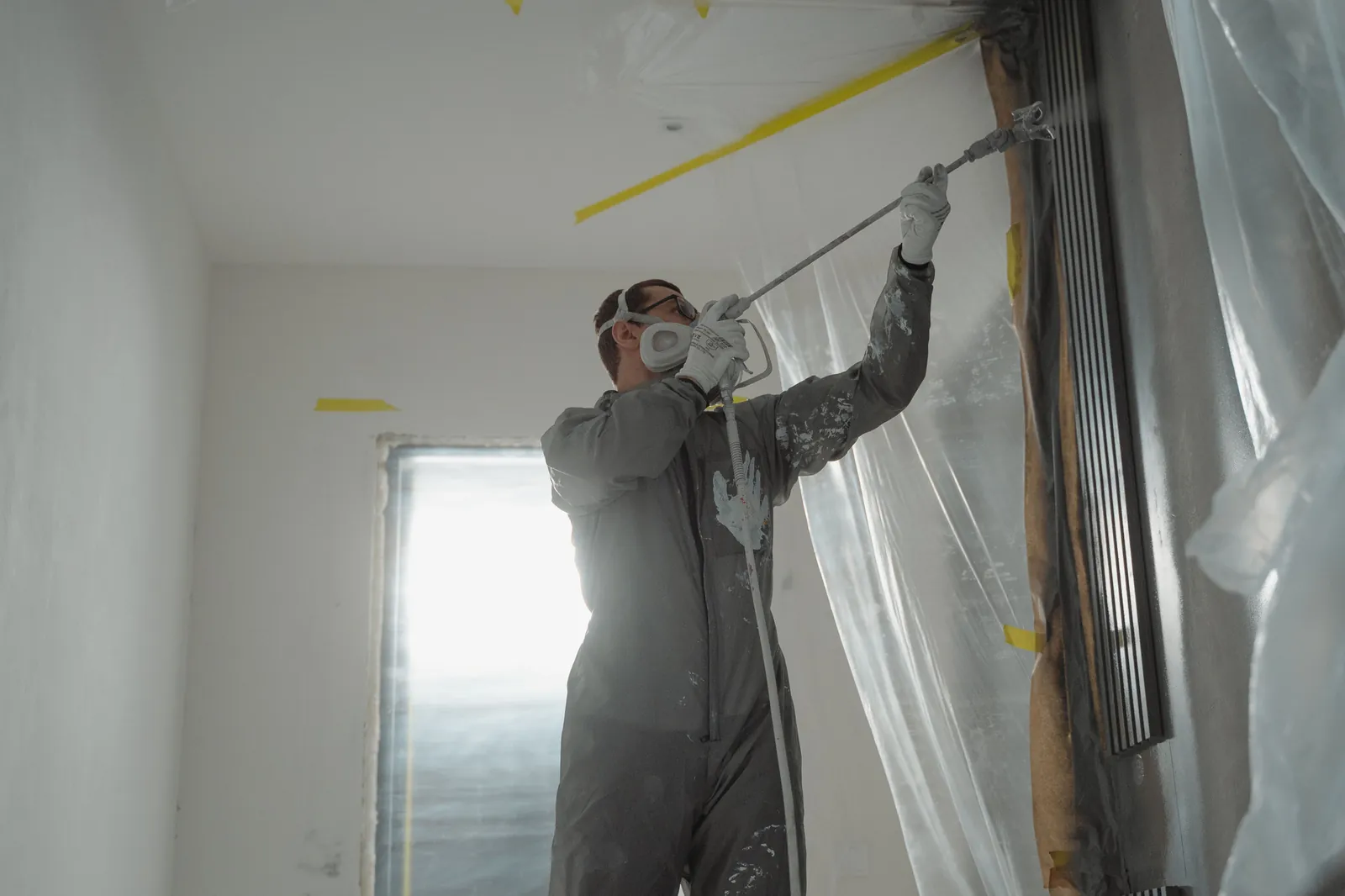
If your basement ceiling is open, painting the joists, ducts, pipes and the underside of the floor above in one colour is an affordable way to finish the space. Black and charcoal make the ceiling recede and hide the clutter; white and light grey make the room feel brighter. Spraying is the practical method, which means careful masking of walls, lights and floors. Check with an electrician about any wiring that needs attention before it is painted.
Concrete floors need a coating made for floors, not wall paint. The surface must be clean and free of oil, and the coating needs time to cure before foot traffic and furniture. Ask how long before you can walk on it and how long before heavy items go back.
Basements get little daylight, so colours look darker than they do on a paint chip. Warm whites, light greige and soft muted colours keep a basement from feeling like a cellar. A matte or eggshell finish limits glare from ceiling lights. If the basement is a rental suite, a washable eggshell makes turnovers easier.
Basements have fewer windows, so fresh air needs a plan. Open the windows you have, use fans to move air towards them, and choose low-odour products. Floor coatings in particular need good airflow while they cure, and the room should stay at a reasonable temperature so the paint dries properly.
Many Toronto and GTA homes have basement suites. Between tenants, a quick repaint in a durable, washable eggshell makes the unit easier to rent and easier to clean. Keeping one standard colour for every turnover means touch-ups always match, and a record of the colour and product saves time next time.
Planning a basement refresh? See our basement painting service or book a free estimate: we check for moisture at the visit before recommending products.
Yes, once the walls are clean, dry and free of efflorescence. Use a masonry primer on bare concrete before the finish coat.
No paint fixes an active leak. Water coming through the wall needs to be repaired first, usually from the outside or with drainage work.
Black or charcoal hides pipes and ducts and makes the ceiling recede. White or light grey makes the room feel brighter. Both are common choices.
Tape a square of plastic to the wall for a few days. Droplets under the plastic mean moisture is coming through the wall.
Cost & planning, 3 min readRoom size is only the start. Here is what really moves an interior painting quote, and how to compare quotes from different painters fairly.
 Interior, 3 min read
Light direction, undertones and sheen decide how a bedroom colour really looks. A simple way to choose, plus tips for nurseries and kids' rooms.
 Cost & planning, 3 min read
What to move, what the crew handles, and the small things that make a painting job go faster: pets, parking, condo bookings and daily routines.

Tell us about the job and we will visit, measure and send you a written quote. No charge, no obligation.

Automated assistant. For an exact price we visit and quote for free.